





 Your agent better know this, or it could become an issue for you.
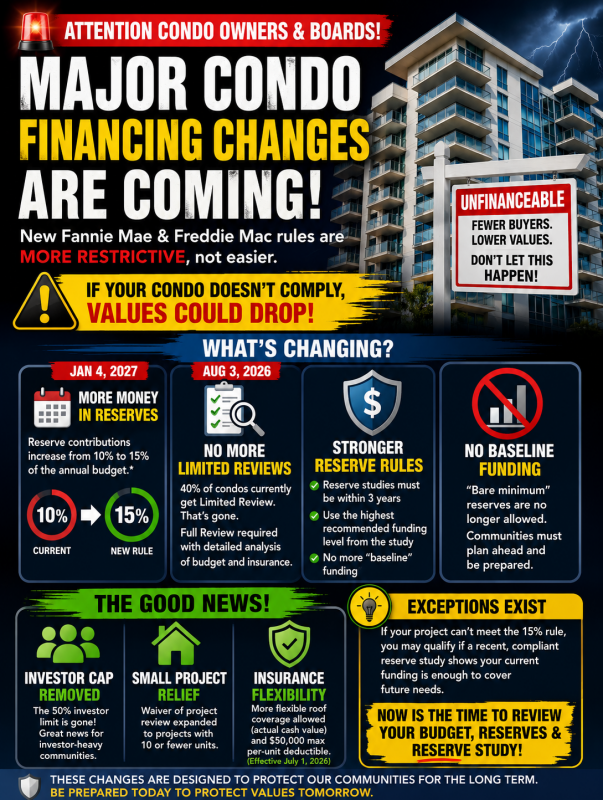
Beginning in 2026 and 2027, the rules for financing condominiums through Fannie Mae and Freddie Mac are changing in a big way. These changes are designed to make condo communities financially stronger, but they could also make it harder for some buyers to get financing if their community isn't prepared.
Why This Matters
If your condo community doesn't meet these new standards, many buyers may not be able to get a conventional mortgage. That means:
Fewer qualified buyers
Homes may take longer to sell
Property values could be negatively affected
What's Changing?
1. Condo communities will need to save more money for future repairs.
Effective January 4, 2027
Condo associations will generally need to set aside 15% of their annual budget for future major repairs and replacements, up from the current 10%.
What this means: Monthly HOA fees may increase so the association can build healthier reserve funds.
2. More condos will face a full financial review.
Effective August 3, 2026
Many condo projects that previously qualified for a simplified approval process will now have to undergo a much more detailed review.
Lenders will examine:
The association's budget
Reserve funds
Insurance coverage
Overall financial health
What this means: Communities with weak finances or deferred maintenance may have a harder time qualifying for conventional financing.
3. Reserve studies become much more important.
Reserve studies estimate how much money a community should save for future expenses like roofs, elevators, roads, painting, and other major repairs.
Going forward:
Reserve studies must generally be less than three years old.
Associations will be expected to fund reserves based on the study's recommendations.
What this means: Underfunded reserves could become a financing problem.
4. "Bare minimum" reserve funding is no longer acceptable.
Some associations have historically saved only enough money to get by.
That approach will no longer meet the new guidelines.
What this means: Communities that have delayed saving for major repairs may need to increase dues or approve special assessments.
The Good News
Investor-heavy communities get a break.
The previous rule limiting investor-owned units is being removed.
What this means: Condo communities with a high number of rental units may now be easier to finance.
Small condo communities have more flexibility.
Projects with 10 or fewer units will qualify for simplified review more often.
Insurance rules become more practical.
The new guidelines:
Allow more flexibility in roof coverage.
Cap per-unit insurance deductibles at $50,000.
This could reduce insurance costs for some associations.
Is There an Exception to the 15% Reserve Rule?
Yes.
If a condo association has a recent reserve study showing that less than 15% is sufficient to cover future repair costs, it may still qualify under the new guidelines.
Bottom Line
These changes are intended to protect buyers and ensure condo communities remain financially healthy over the long term.
However, condo associations with:
Low reserve funds
Deferred maintenance
Outdated reserve studies
Weak budgets
could face financing challenges that reduce the pool of qualified buyers and put downward pressure on property values.
If you own a condo or serve on your association's board, now is the time to review your budget, reserve funding, and reserve study before these rules take effect.
#CondoMarket #CondoFinancing #FannieMae #FreddieMac #RealEstateNews #HousingMarketUpdate #CondoAssociation #HOA #ReserveFunds #SpecialAssessment #MortgageNews #RealEstateInvesting #FloridaRealEstate #NaplesRealEstate #SWFLRealEstate #PropertyValues #HomeBuyers #RealEstateEducation #HousingPolicy #2026Housing #2027Changes #CondoOwners #RealEstateMarket #BuyersAndSellers